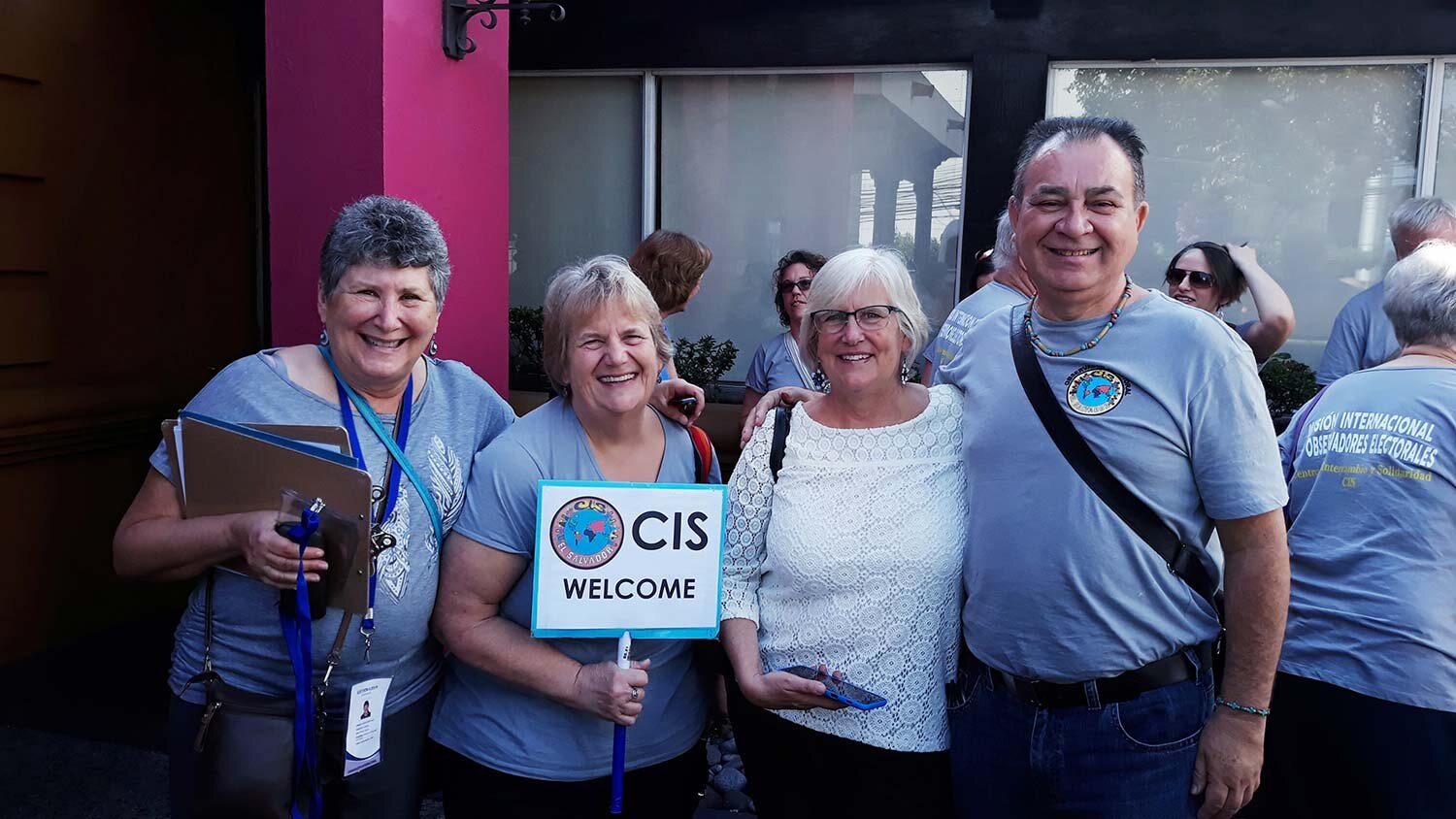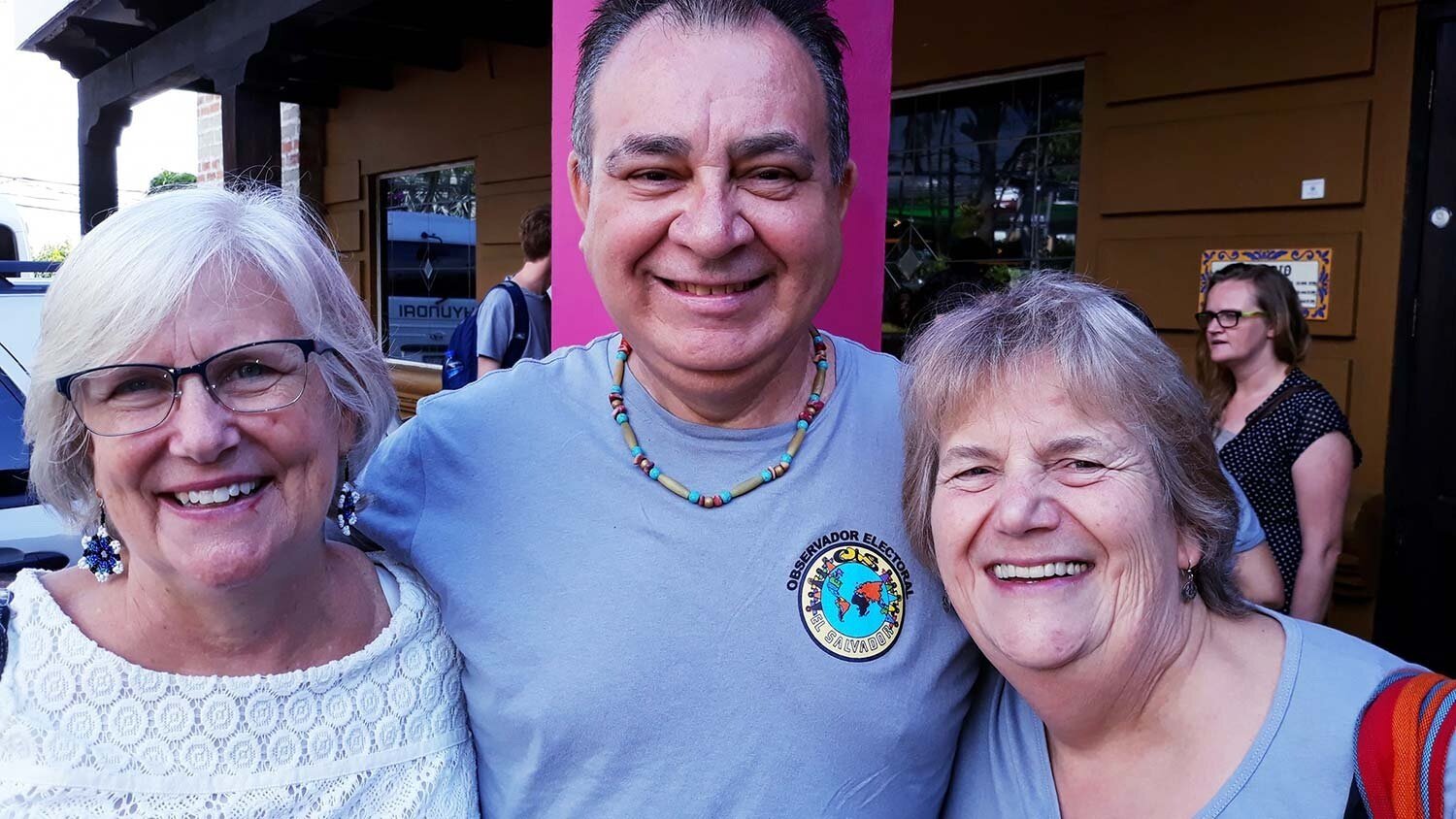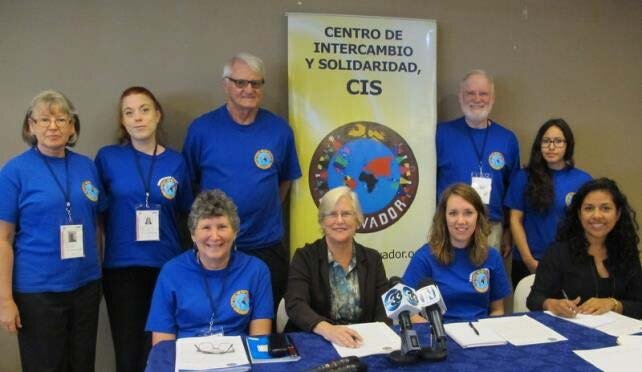

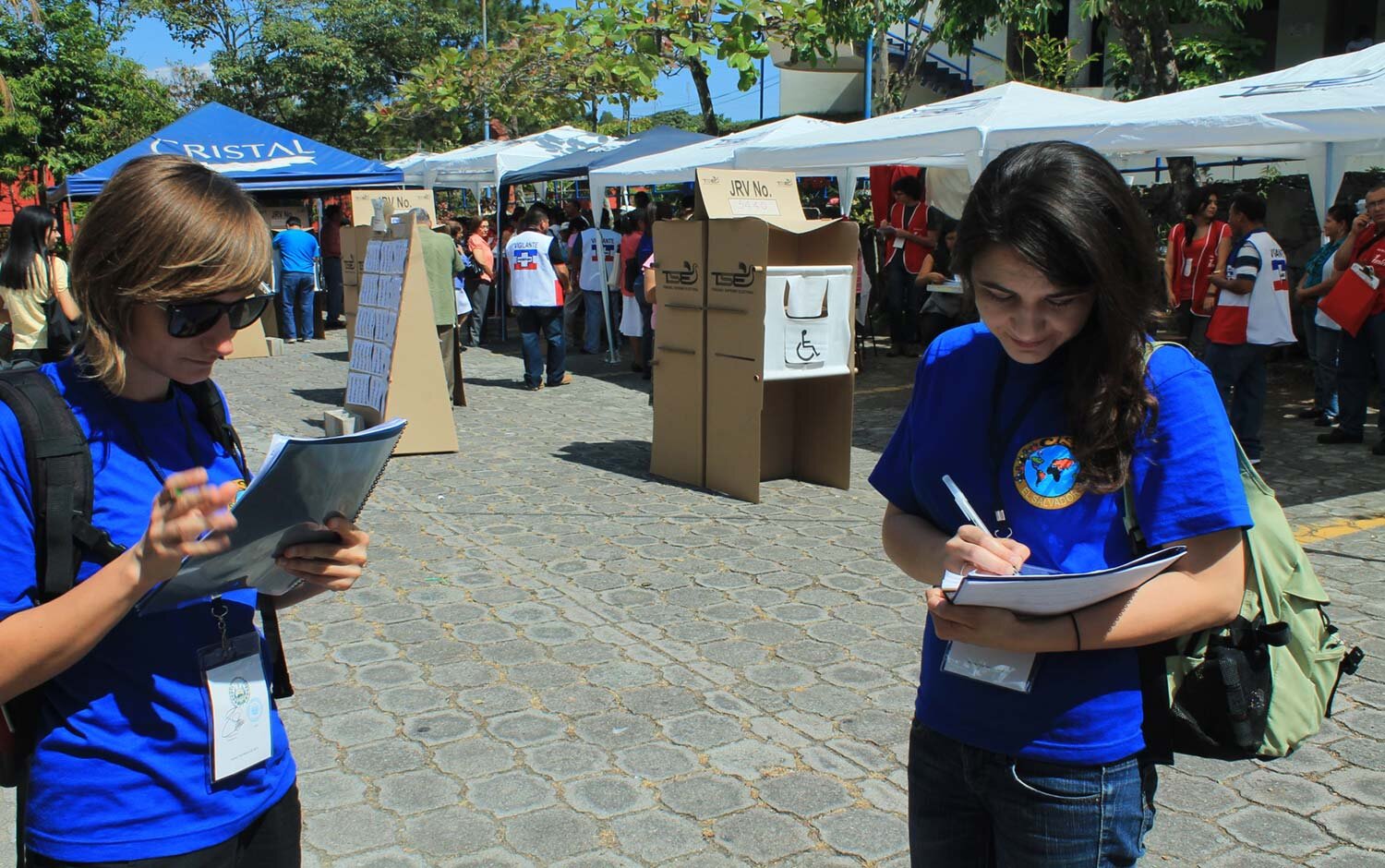
The CIS is one of few entities that has organized volunteer observers from abroad in an election observation mission for every presidential and legislative election in El Salvador since the return of democracy with the signing of the Peace Accords in 1992. El Salvador’s Supreme Electoral Tribunal (TSE), Salvadoran communities, and local civic and grassroots organizations have continued to ask the CIS to organization observation missions.
The CIS International Election Observer Missions have earned a reputation of respect both in El Salvador and abroad for their professional organization and commitment to a free and fair democratic election process.
Each CIS Mission produces and presents a final report to the Supreme Election Tribunal, the Commission on Electoral and Constitutional Reforms of the Legislative Assembly, major political parties and other stakeholders that assesses and offers recommendations regarding the election proceedings and the implementation of existing electoral reforms.
The findings and recommendations from the CIS’s election observation reports have served to spotlight strengths and weaknesses in the electoral process. They have been used regularly as a basis for electoral reform proposals presented by members of the Legislative Assembly, the Supreme Electoral Tribunal (TSE), and other electoral institutions and organizations. The CIS has also played a key role in alerting authorities to pre-electoral anomalies that we have observed
Context 2027
Elections for President, legislative deputies, and municipal mayors and council members will be held on February 28, 2027. The electoral process will be similar to that of the previous 2024 elections. Salvadorans residing in El Salvador will vote using paper ballots on election day. Those holding a DUI (identity document) or passport while living abroad will be able to vote by phone up to one month prior to the elections or via computer at polling centers on election day itself.
It is important to acknowledge that the context in which these elections are taking place is not conducive to a democratic process. None-the-less, the CIS believes it is important to observe these elections to have historical record, ensure the minority vote is respected as well as noted, and to make recommendations to strengthen representative democracy.
Agenda
-
Monday, February 22: Arrival in the country
4:00 PM: Orientation and dinner
Tuesday, February 23: Context analysis; embassy visits; dinner at the volcano
Wednesday, February 24: Field visits – CIS projects (human rights, women’s businesses, youth scholarships and leadership development, water and environment)
Thursday, February 25: Meetings with civil society, candidates, and the TSE
Friday, February 26: Training for observers
Saturday, February 27: Observation of the delivery of electoral materials
Sunday, February 28: Election Observation
Monday, March 1: Submission of observation forms and debriefing session
Tuesday, March 2: 7a.m. Press conference
Observer departure for airport (please schedule afternoon departures)
-
CIS also trains long term observers to help coordinate the mission. Long term observers are required to participate between January 4 and March 31st to organize work in the territories, be fully trained, and to help systematize recommendations and reporting. Fluent Spanish is a requirement for long term observers.
Monday, February 22: Arrival in the country4:00 PM: Orientation and dinner
Tuesday, February 23: Context analysis; embassy visits; dinner at the volcano
Wednesday, February 24: Field visits – CIS projects (human rights, women’s businesses, youth scholarships and leadership development, water and environment)
Thursday, February 25: Meetings with civil society, candidates, and the TSE
Friday, February 26: Training for observers
Saturday, February 27: Observation of the delivery of electoral materials
Sunday, February 28: Election Observation
Monday, March 1: Submission of observation forms and debriefing session
Tuesday, March 2: 7a.m. Press conference




Objectives of CIS Election Observation Missions
To document constitutional and legislative changes in the pre-election period and their impact on the electoral process.
To provide an overview of Salvadoran reality and the context of the elections.
To promote a culture of peace and solidarity with Salvadorans working for democracy and social and economic justice.
To monitor and record the electoral process, election day and the vote count and provide recommendations for strengthening democracy

Requeriments and Orientation
Commit to serving as an observer in accordance with international standards, limiting the role of documenting the process without interfering in it.
Bilingualism and/or prior experience as an observer are recommended. (Spanish is not a requirement for short term observers)
It is recommended not to be affiliated with any Salvadoran political party. Salvadoran nationals affiliated with a party have greater influence acting as party poll watchers or serving at polling stations.
Important Note:
CIS also trains long term observers to help coordinate the mission. Long term observers are required to participate between January 4 and March 31st to organize work in the territories, be fully trained, and to help systematize recommendations and reporting.
Fluent Spanish is a requirement for long term observers.
Serve as an election observer
in 2027!
Election observers are volunteers who receive specialized training to observe election procedures and identify when they adhere to or violate free and fair election processes, which enables the CIS mission to assess the quality of the elections, issue recommendations, and determine whether or not to certify the election outcomes.
As an election observer, you will contribute to oversight of the electoral process and facilitate a safe environment that enables broad participation.
Application Deadlines
Observers in El Salvador: January 1, 2027
Observers in Salvadoran Consulates abroad: January 1, 2027
Long term Volunteer Observers: December 1, 2026
Payments Due by January 1, 2027
Early payment appreciated to cover organizational expenses and so we can make payments on hotel and in country transportation reservations.
Observer Application Form 2027
Short Term Observers:
February 22 – March 2, 2027
Arrival: February 22, 2027
Departure: March 2, 2027
Short-term observer fees cover in-country expenses and do not include plane fare:
$1,100 SINGLE ROOM covers food,| transportation, lodging, training, and coordination during said dates.
$900 SHARED ROOM covers food, transportation, lodging, training, and coordination during said dates.
$650 NO HOUSING NEEDED. ROOM covers lunch and dinner (includes breakfast only on election day Feb 28 and the press conference March 2), transportation, lodging, training, and coordination during said dates.
Any additional dates prior or post mission, observers will be required to pay their own expenses. CIS can make additional hotel reservations upon request
Long Term Volunteer Observers:
January 4 – March 20, 2027
Long-term observers will cover plane fares and their own living expenses.
CIS will cover any expenses related to set up and cover expenses the week of the observer mission. If anyone is interested in working on the final report, we ask you to stay through the month of April.
CIS will be closed during Holy Week – March 20 -29th, 2027.
Payments
Can be made by check to:
Los Olivos CIS
PO Box 76
Westmont, IL 60559
or Online:
Refunds*
*Fifty percent of payments can be refunded upon request if cancelations are made two weeks or more prior to January 12th.
CIS makes un-refundable deposits on housing and transportation and other expenses.
Any excess funds will be used for future observer missions or CIS solidarity work.
About the Presidencial, Legislative, Municipal Elections, and Central American Parliament of 2024